



More and more organisations are facing the same reality: teams are operating at full stretch, while signs of fatigue and emotional exhaustion are becoming increasingly visible. These signals do more than highlight today’s challenges: they point to where you can act tomorrow to support your employees’ well-being in a sustainable way. With the right insights and a targeted approach, you build a more resilient, productive and engaged workplace.
New regulatory requirements
Since the start of the current federal government, health has been firmly placed on the labour market agenda. Prevention, follow‑up and reintegration are now subject to stricter oversight.
An active well-being policy is no longer optional. It is a responsibility.
Employers now face:
- increased follow‑up obligations
- shorter intervention deadlines
- potential financial penalties for non‑compliance
More info about the new obligations? Click here.
The message is straightforward: the stronger your well-being policy, the better you meet these requirements and the better your organisation performs. This may sound intuitive, but it is also backed by scientific evidence.
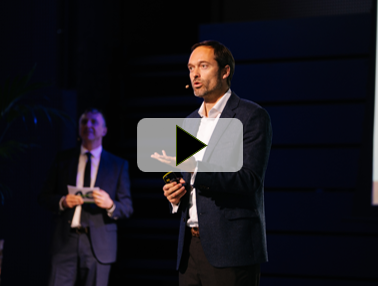
Well-being is subjective. Its impact is not.
That’s according to Jan-Emmanuel De Neve, a globally renowned well-being economist and professor at the University of Oxford. More than fifteen years of international research show that subjective well-being (how employees feel and think about their work) directly affects objective performance outcomes1. Higher well-being levels translate into increased productivity (up to +12%), stronger retention, higher engagement and improved financial results.
Well-being is therefore not a cost, but a performance driver. And opposite that driver lies a very real and rapidly growing cost: absence.
Would you like to discover the insights from well-being economics that can help move your organisation forward? Click here.
The economic impact: greater than you may realise
The figures on long‑term sickness absence are well known: over 500,000 employees have been absent for more than a year, with one in three cases linked to mental health issues such as burnout or depression.
What is less visible is the financial reality behind these figures. While it is difficult to attach a single price tag, the costs2 are tangible and often substantial:
- €1,590 per employee per year (direct costs)
- for an organisation of 100 employees: approximately €160,000 per year in unworked hours
- indirect costs (temporary staff, replacement, productivity loss): +25%
- in 2025, 10% of all working days in Belgium were lost due to illness
Absence is therefore not just an HR issue, but a strategic and financial risk. Conversely, organisations that invest in well-being can reduce costs and improve performance.
The key question is: where do you start? And what should you prioritise? AG supports you exactly where it matters most.
A preventive approach to mental well-being
The most effective strategy? Acting before problems escalate. Strengthening mental well-being has the greatest impact when employees recognise early warning signs and understand where they stand. My Mind by AG offers employees and their resident family members accessible, evidence‑based mental support, directly via the MyAG Employee Benefits app.
What’s included for your employees:
- Scientifically validated test (KU Leuven) with a personal score and risk assessment
- personalised self‑care tools
- programmes focusing on stress, sleep, resilience and more
- Safe2Talk: 24/7 mental, legal and financial support
- fast access to professional psychological care
And it delivers real impact: 75% of employees who complete the resilience assessment take concrete action.
My Mind focuses on the areas that consistently score lowest in the test results: emotional regulation, concentration and decision‑making. By strengthening these pillars, employees build long‑term resilience.
Embedding well-being structurally: a policy that works
Individual and preventive support is one pillar. Embedding well-being structurally across the organisation is the other. Together, they create a powerful framework: individual initiatives gain impact when supported by clear agreements, processes and follow‑up. Waldon, AG subsidiary, supports you through this journey in three strategic steps.
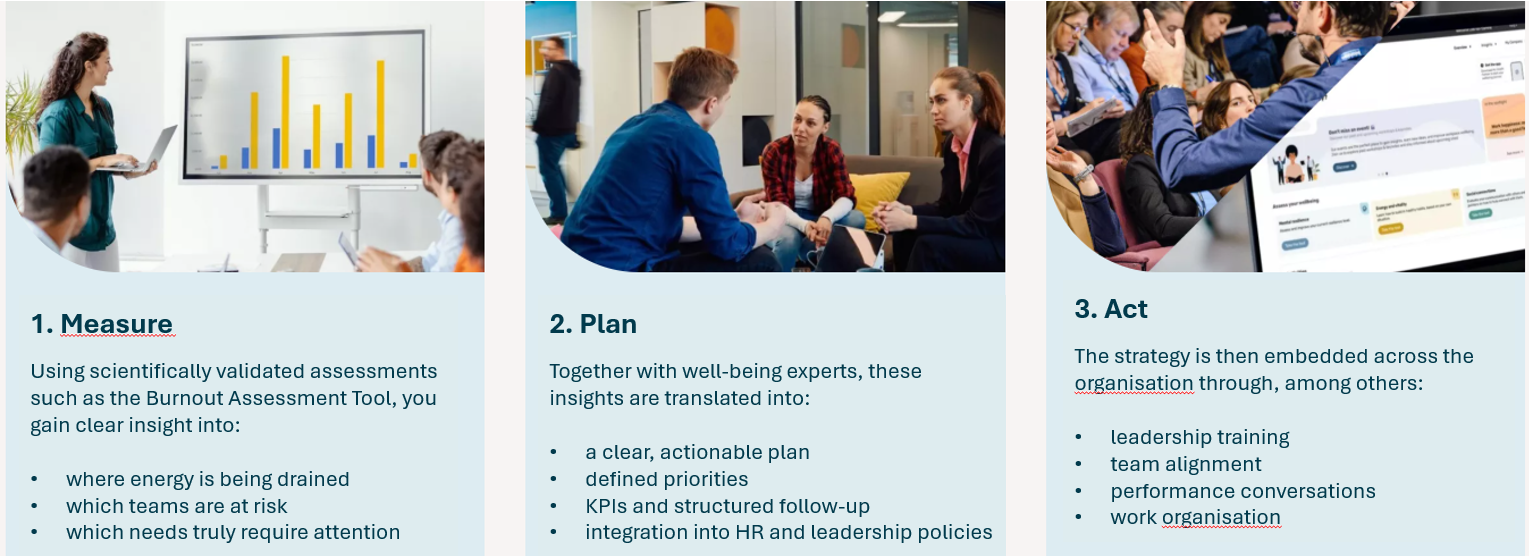
Today, more than 500,000 employees already have access to Waldon’s well-being programmes.
Do yours?
A strategic choice
You can wait until employees drop out. Or you can invest today in a forward‑looking approach that:
- reduces long‑term absence
- limits financial risk
- boosts productivity
- strengthens your employer brand
- ensures regulatory compliance
Questions?
Your trusted AG contact will be happy to help.