



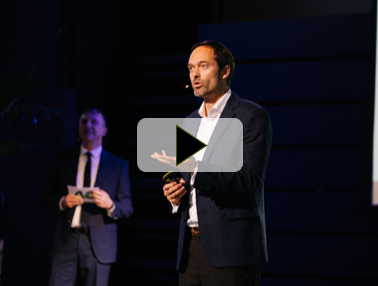
What if well-being were one of your strongest levers for productivity, profitability and competitiveness? Not as a “feel-good” concept, but as a hard economic reality. That is exactly what Professor Jan-Emmanuel De Neve (University of Oxford), a leading expert on well-being and performance, explains in our podcast episode with Sven Desmytter, Head of Sales AG Employee Benefits & Health Care.
Subjective experience, objective impact
Well-being is inherently subjective: it reflects how people feel at work. Yet those feelings shape behaviour, and behaviour translates directly into measurable outcomes: productivity, engagement, absenteeism. “There is no trade-off between well-being and profit,” says Professor De Neve. “Well-being and performance reinforce each other.”
Believing that investing in well-being is a cost rather than a return is, quite simply, outdated.
Three ways well-being drives business outcomes
- Productivity: happier employees perform better, up to 12% more productive according to years of research.
- Attraction: organisations with strong well-being scores attract talent more easily.
- Retention: well-being determines whether people stay, far beyond pay alone.
Why ‘intuitive well-being’ rarely works
Many organisations are already doing something: fruit baskets, yoga sessions, occasional workshops. Well-intentioned, but often ineffective. Why? Because they are based on intuition, not evidence. Without measurement, well-being becomes a gamble. An expensive one.
Measure what truly matters
“Measure what you treasure,” as Professor De Neve puts it. An effective well-being strategy starts with measurement and with measuring the right things. According to him, it is crucial to distinguish between:
- Well-being indicators (how people feel): job satisfaction, stress levels, resilience, sense of purpose
- Well-being drivers (what shapes those feelings): belonging, autonomy, leadership, workload, pay
Only by separating the two can organisations design targeted, effective interventions.

Looking to implement a comprehensive well-being strategy?
Waldon, an AG subsidiary, helps you take a structured, data-driven approach. By mapping both well-being and underlying needs, you move from assumptions to insight and build a realistic, actionable roadmap. Together with well-being experts, you build a concrete, achievable action plan for a sustainable well-being culture.
From science to practice: where to start
A high-impact approach doesn’t need to be complex or costly. Professor De Neve highlights three low‑effort, high‑impact actions you can start implementing today:
- Peer recognition: enable employees to recognise one another for exceptional efforts “beyond the call of duty” through a simple points-based system, optionally linked to a reward.
- Job crafting: allow small, flexible adjustments to tasks or working hours, agreed between employee and line manager. The message “my employer cares about me” matters just as much as the practical arrangement.
- Embedding well-being in leadership: organisations that make managers jointly responsible for well-being scores see structurally better results. Well-being stops being an HR project and becomes a shared responsibility.

What your employees already benefit from today
Through AG’s collective insurance solutions, employees gain access to My Mind by AG: structured mental support beginning with a BAT screening (Burnout Assessment Tool). Based on the results, they receive personalised modules, exercises, coaching and, when needed, rapid access to psychological support. Your employees get the right intervention at the right moment: preventive where possible, supportive where necessary.
Work as a cornerstone of overall well-being
Work is essential to our overall well-being, not just our well-being at work. Work is about far more than income. “Salary explains only one third of the well-being effect,” says Professor De Neve. The remaining two thirds stem from non-financial factors: identity, routine, personal growth and meaning.
“That’s why reintegration of long‑term sick employees is so important,” he emphasises. Not only economically, but above all humanly. When work suddenly disappears, the entire bundle of positive psychological effects that strongly support our general well-being disappears too.

Market leader in professional reintegration since 2017
With proven expertise and more than 12,000 supported programmes, AG helps employees who are on sick leave for psychological reasons return to work sustainably. Return to Work by AG is included in the income protection insurance and offers a holistic approach. Each participant receives a personalised programme guided by psychologists, coaches, occupational therapists or sophrologists. You can choose from five carefully selected reintegration partners. The result? Six months later, 90% of participants are still at work — without relapse
AG as your strategic partner
AG supports well-being across the full spectrum: prevention, care and reintegration. Your strengths? A well‑founded well-being policy, easy access to mental support and sustainable reintegration pathways with proven results.
Ready to make well-being a strategic priority?
Discover how AG can help strengthen well-being across your organisation.