


The real question is no longer whether your organisation invests in well-being.
The question is: are you doing so in a targeted, measured and sustainable way?
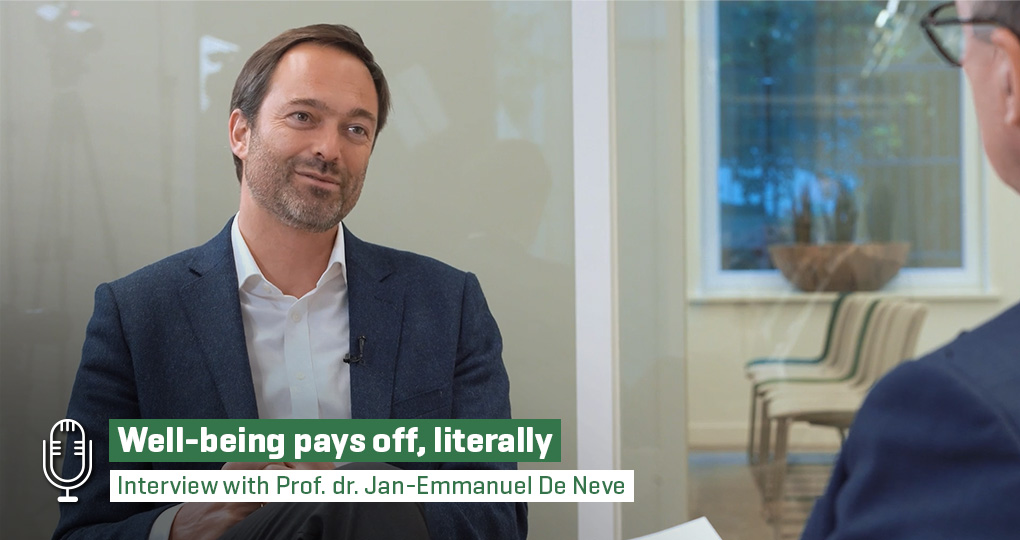
- Prefer a written version of the conversation? Click here.
Subjective by nature, objective in impact
Over fifteen years of research show that subjective well-being (how employees feel and think about their work) directly drives objective performance. “Happier employees perform better, are less absent and stay longer,” says Professor De Neve. “What once seemed intuitive is now firmly backed by data.”
The business case
- A large-scale study at British Telecom found a 12% increase in sales productivity when employees felt better.
- In roles requiring high emotional intelligence, productivity gains can reach 20%.
From intuition to data
Many organisations take action on well-being, but without data-driven direction. The result: fragmented initiatives and limited impact. Professor De Neve advocates a clear methodology: measure well-being and its drivers, analyse the results, and invest where the greatest leverage lies.
- Step 1: measure well-being indicators
Assess how employees feel using short, validated questions on satisfaction, stress, happiness and purpose.
- Step 2: map the drivers
Understand what shapes those feelings: belonging, autonomy, leadership, work-life balance, flexibility, pay and career prospects.
- Step 3: analyse with precision
Compare results across business units, roles (e.g. sales vs operations), working models (on-site vs hybrid) and demographics. This reveals where tailored action is needed.
- Step 4: prove the business case
Link well-being data to performance metrics such as productivity, sales and retention to uncover causal relationships and guide action.
Low effort – high impact: what truly works
Prof. De Neve shares several practical actions your organisation can implement today to boost well-being:
- Peer recognition: enable employees to acknowledge exceptional contributions, for example through a simple points system, with or without a reward, benefiting both giver and receiver
- Job crafting: allow small, flexible adjustments to roles or schedules, boosting autonomy and satisfaction without compromising productivity
- Link management incentives to team well-being: making well-being a shared responsibility rather than an HR initiative
From science to practice: AG as your strategic partner
AG helps translate these insights into tangible solutions — preventive, curative and supportive.
Our strength lies in combining the following elements:
Protection that strengthens mental well-being
Mental support within reach
Sustainable return-to-work programmes
An embedded well-being policy that works